The Importance of Staying Close to Customers
Chastia software has been present on the Slovak market for more than 20 years. According to Igor Stanek, the company’s co-founder, Managing Director, and software architect, it has evolved from a simple asset management application into a comprehensive CAFM (Computer-Aided Facility Management) solution. We spoke with him about the areas the platform currently covers and the direction of its future development.
CHASTIA was founded in 2004. However, the origins of the software associated with the company date back to 1997. The original idea came from your father. What was the primary goal behind what has become a very successful project today?
The software was originally developed within the engineering company TERMOKLIMA. Its development began with the goal of providing customers with something extra—added value. Our vision was to deliver projects, particularly technical drawings and documentation, directly through software that would also serve as an asset and technical equipment registry, especially for boiler plants and other facilities owned by our customers.
For this reason, we started developing software for asset and technical equipment management within our engineering company. After 2000, we realized that the software needed to be separated into an independent business. We established the CHASTIA brand first in the Czech Republic in 2003 and then in Slovakia in 2004.
The project evolved into a standalone product and, as our customer base grew, the software continued to develop further, while its original concept of asset management remained unchanged. In the 1990s, internet access was either unavailable or extremely limited. We were not even aware that similar software solutions already existed abroad.
It was only after 2000 that we realized we had chosen the right direction, as similar systems began appearing internationally as well. At that time, my father started researching foreign solutions and gathering information from public sources, conferences, exhibitions, and trade fairs, where he found new inspiration for further software development.
Another key factor in the software’s evolution was our early customers. They frequently requested additional functionalities that were missing from the system, which naturally pushed us forward and helped shape the product.
Today, we have a much deeper understanding of the market and the competitive landscape, and we benefit from 27 years of accumulated know-how. This enables us to focus on a clear and well-defined direction for the future development of the platform.
You have been involved in software development almost from the very beginning, starting at a very young age. Was it a major challenge for you, or did you see it more as a school project?
In the beginning, it was more or less experimentation. I was genuinely involved in software development from a very young age, specifically since the end of elementary school. Programming fascinated me from the moment I first got access to a computer in the 1990s.
As a result, I never viewed software development as a school project or a challenge. For me, it was always something I genuinely enjoyed and considered a hobby rather than an obligation.
Are you still actively involved in software development, or do you focus on other activities within the company nowadays?
Two years ago, I began gradually handing over the day-to-day management of the company to the younger generation and to colleagues with less seniority. Currently, I am primarily focused on our Czech branch and on expanding our business beyond the Czech and Slovak markets.
At the same time, I have partially returned to overseeing software development and contributing to its professional and strategic direction. This includes strategic planning to determine the future course of the entire project and ensure its continued growth.
I have delegated operational sales activities and the company’s daily management to my colleagues, and I am pleased to see everything moving forward successfully. Nevertheless, I still provide expert support whenever needed, whether in complex business cases or customer communication.
My primary focus today, however, is on international expansion and the strategic development of our software solutions.
What functionalities did the software provide in its initial version, and how has it evolved over the past 27 years?
Regarding the software’s initial functionalities, we focused primarily on the asset register of technical assets. The engineering company TERMOKLIMA specialized in the design of heat generation systems, particularly within the district heating sector, which mainly included boiler houses and various technological facilities.
Customers needed a way to manage technical drawings, equipment information, descriptions, photographs, warranty periods, and maintenance or inspection schedules. Therefore, the core functionality of the software was asset and equipment registration.
Over the years, the software evolved into a comprehensive CAFM (Computer-Aided Facility Management) solution. Today, I can confidently say that we are capable of competing with international solutions. The areas we currently cover include asset documentation and asset management, facility management, property management, energy management, and smart metering. In the latter area, we also provide dedicated hardware solutions.
If we were to summarize it, who exactly is your software designed for?
What makes Chastia unique is that it is a truly comprehensive platform capable of covering a wide range of business processes and operational areas that organizations need to manage. Our customers come from many different industries and market segments, representing a broad spectrum of businesses.
Among our clients are facility management companies that manage properties on behalf of third parties and use our software to optimize their operational processes. Another important customer group consists of property owners across various industries where our system is applied.
Interestingly, our clients manage a wide variety of real estate assets, including office buildings, shopping centers, manufacturing facilities, logistics parks, hospitals, hotels, and rental housing portfolios, which have become a particularly dynamic and rapidly growing sector in recent years.
In addition to property owners, our customers also include real estate investment and asset management funds that use our software to manage diverse property portfolios. Chastia can support operations ranging from small facilities such as bank branches and retail stores to large manufacturing plants, hospitals, and extensive office complexes.
This breadth of functionality and versatility is one of the key reasons why Chastia stands out in the market.
You mentioned rental housing, which is currently a very topical and fast-growing segment. How exactly can your software be used in this area?
Since rental housing consists of residential rental properties intended for lease, our software can be fully utilized across all aspects of their management. It covers the entire process, from asset registration and building passportization to the management of individual apartments, including their equipment and furnishings.
Within the facility management domain, the software enables efficient management of buildings and their technical assets, including the scheduling and tracking of inspections, maintenance activities, repairs, fault reporting, and issue resolution. At the same time, it fully supports property management processes, covering the entire lifecycle of lease agreements.
Our software automates the creation and administration of rental contracts, invoicing, payment tracking, tenant reminders, and financial reporting. Energy management is another essential component of modern building operations. Therefore, our system enables the collection of data directly from physical devices, such as energy meters, and supports the allocation of energy consumption among tenants, allocation of energy consumption among tenants, and billing preparation.
In addition, the platform provides carbon footprint monitoring and supports the preparation of ESG reporting. As a result, the management of commercial real estate and rental housing through Chastia is truly comprehensive, leveraging the full power of our software to ensure efficient, efficient management of these properties.
All areas, including facility management, are constantly evolving. From being a term that was almost unknown in the 1990s, facility management has become one of the fastest-growing industries. How have you responded to this development in your software, and how do you continue to adapt to it?
Of course, we closely monitor these developments and continuously adapt to them. We attend numerous Slovak, Czech, and international conferences and carefully listen to market needs and customer requirements. This allows us to broaden our perspective and optimize our software so that it reflects current trends and industry developments.
We also maintain close relationships with our customers and closely follow legislative changes and emerging trends. This enables us to consistently provide solutions that meet our clients’ evolving needs and to tailor our software to their specific requirements.
This customer-focused approach helps us remain relevant, innovative, and competitive in a rapidly changing market.
Which client requirements have been the biggest challenges for you? How are their expectations evolving?
It is difficult to say which challenge was the greatest. In fact, I cannot recall any single request that stood out significantly above all others. Generally speaking, nothing is so complex that it cannot be solved, but at the same time, nothing is so simple that it can be resolved overnight.
Today, we are facing current challenges such as energy management, ESG (Environmental, Social and Governance) requirements, and carbon footprint reduction. These are the key topics driving our development forward.
Each market segment we work with has its own specific challenges. In property management, there is continuous pressure to automate processes—from invoicing and reporting to many other administrative tasks. In facility management, on the other hand, the focus is on simplifying operational processes.
As the market continues to face a shortage of qualified professionals, it is essential to adapt processes so that they remain accessible even to people without extensive technical expertise. This does not mean that these employees are less capable; rather, it is simply more efficient to streamline and automate processes wherever possible.
A topic that certainly cannot be ignored today is artificial intelligence. In your opinion, what potential does it have in the field of software and hardware solutions for facility management?
Today, artificial intelligence is influencing every segment and phase of the software lifecycle. This is particularly evident in the automation of our internal processes and in increasing productivity during software development itself. Our developers frequently and enthusiastically use AI tools for a wide range of tasks.
In the field of facility management, artificial intelligence brings significant improvements, especially in the automation of data collection and data analysis. For example, in energy management, AI can automate the processing of financial and accounting documents while also providing predictive insights across various areas.
It can help detect data errors, predict equipment failures, and forecast the energy performance of buildings. All these innovations find practical applications across the different industries and sectors in which we operate.
The use of artificial intelligence enables us to stay one step ahead, whether by improving internal processes or by delivering new and innovative solutions to our customers.
Naturally, the question arises whether people should be concerned about their jobs as processes become increasingly simplified and automated. However, today’s reality is different. The issue is not that people are losing their jobs because of automation, but rather that there is already a shortage of qualified professionals. In many cases, we actually need automation to compensate for the declining availability of skilled workers.
If there were more qualified people available on the labor market, automation might potentially become a threat to certain positions. This is especially true in our region. As a result, automation is becoming a necessity rather than an option, because without it, further progress would be difficult to achieve.
How strongly do you feel the shortage of qualified professionals? Which positions are the most difficult to fill from your perspective, and what recruitment channels do you use?
We do have talented people on our team, but I am not sure whether we have enough of them. We are constantly looking for new professionals who are interested in working with software, particularly consultants and system implementation specialists.
At the moment, we are primarily looking to fill three key positions: consultants, project managers, and software developers. We need them to keep up with software implementations for new customers and to continue developing existing installations for clients who already use our solutions. The same applies to software development, where there is a continuous demand for developers.
In general, there is a significant shortage of people across all industries and sectors. The labor market is extremely tight, and the workforce cannot keep pace with demand. Demographic trends are also playing a role—fewer people are being born, while the existing workforce is aging. There are fewer young people entering the labor market, and they are often less motivated to work. Their expectations are high, but in practice they frequently lack sufficient experience or skills.
In Slovakia, there is also a specific challenge related to legislation governing the employment of foreign workers, which significantly complicates international recruitment. Without these legislative barriers, it would be much easier to address the shortage of qualified professionals by hiring experts from abroad.
Currently, we use the services of headhunters and recruitment agencies that actively search for and approach candidates in the market. Nowadays, it is common for job advertisements to receive very few responses. Without proactive recruitment efforts, it is therefore difficult to find new employees and specialists.
Moreover, in our segment, we are the only company in Slovakia that approaches this field in such a comprehensive way. As a result, there are no “ready-made” experts who could immediately join the company and become involved in our processes. We therefore need to recruit people from related industries and train them according to the specific needs of our business.
For many candidates, the location of work is also important. That is why we operate several offices in different locations, specifically in Košice, Poprad, Bratislava, and Prague.
You currently operate in Slovakia and the Czech Republic. As you have already indicated, you plan to expand your software into other European Union countries in the near future. Which specific countries would you like to establish yourselves in?
We are planning to expand our software solutions into other EU countries that are geographically close to us. Neighboring countries, including the Balkan region, are particularly attractive because they represent dynamically developing markets. Expansion into Germany or Poland is somewhat more challenging.
However, we are open to any country where there is customer demand. Many of our clients have branches not only across Europe but also worldwide, and we are fully prepared to implement our software in new markets as well. We have established internal processes that enable us to deliver our solutions effectively in additional countries.
Chastia is not just software. The company has a much broader scope. What other services do you provide to your clients?
In addition to software solutions, we began developing our own smart metering solution in 2017. Together with our partners, we also supply hardware, allowing us to cover the entire data collection process from the field in a comprehensive way. While energy management remains our primary focus, our solutions extend beyond this area.
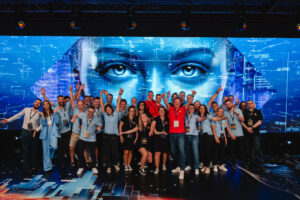
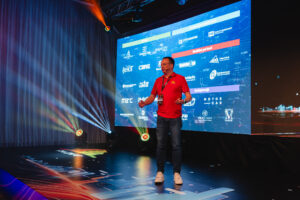
We also focus on building environmental quality and professional education. For more than ten years, we have been organizing educational conferences. The most well-known are FM Camp and Energy Camp, which alternate every other year.
These conferences have become some of the largest and most successful events of their kind in Slovakia and, I would dare say, also in the Czech Republic. Every year, they attract more than 300 participants who gather for two days in the High Tatras, at the Poprad Aquacity resort.
The conference serves as a platform where professionals from various fields meet, particularly middle and senior management representatives from different organizations. Each year, we strive to improve the conference further, and in recent years it has been opened by internationally recognized keynote speakers. These are highly respected experts in the fields covered by the conference that year.
We continuously work on enhancing quality—not only in terms of the conference program and presentations, but also through accompanying social programme. Unlike many other events on the market, we aim to maintain an informal atmosphere while preserving a high level of professionalism and expertise.
Next year, we plan to introduce further innovations to the conference. It will take place over three days, from June 11 to June 13, 2025, and will feature a somewhat different format than in previous years. We have many innovative and exciting ideas in store. Details will be gradually announced, and we believe these new features will contribute to an even higher-quality event experience.
(The interview was published in the Building Management magazine, issue 04/2024.)